
Is Getting a Real Estate License Worth It? Costs vs Real Pay
10 min read ·

Co-founder of MindMax and Memrise, Grand Master of Memory
Is getting a real estate license worth it in this market?
Getting a real estate license is worth it if you'll close enough deals each year to cover the ongoing costs. NAR's 2026 Member Profile puts median gross income at $59,200, but members with 2 years' experience or less had a median of just $8,000. Agents online put the yearly cost of a license, MLS and board membership at $2,000 to $5,000. It suits career changers with savings to live on, and part-timers or investors expecting 2 or more deals a year. If you move once every few years, hiring an agent usually costs less.
What agents actually earn right now
The numbers below come from the NAR 2026 Member Profile feature sheet, published August 19, 2026 and covering 2025 activity. They describe NAR members only.
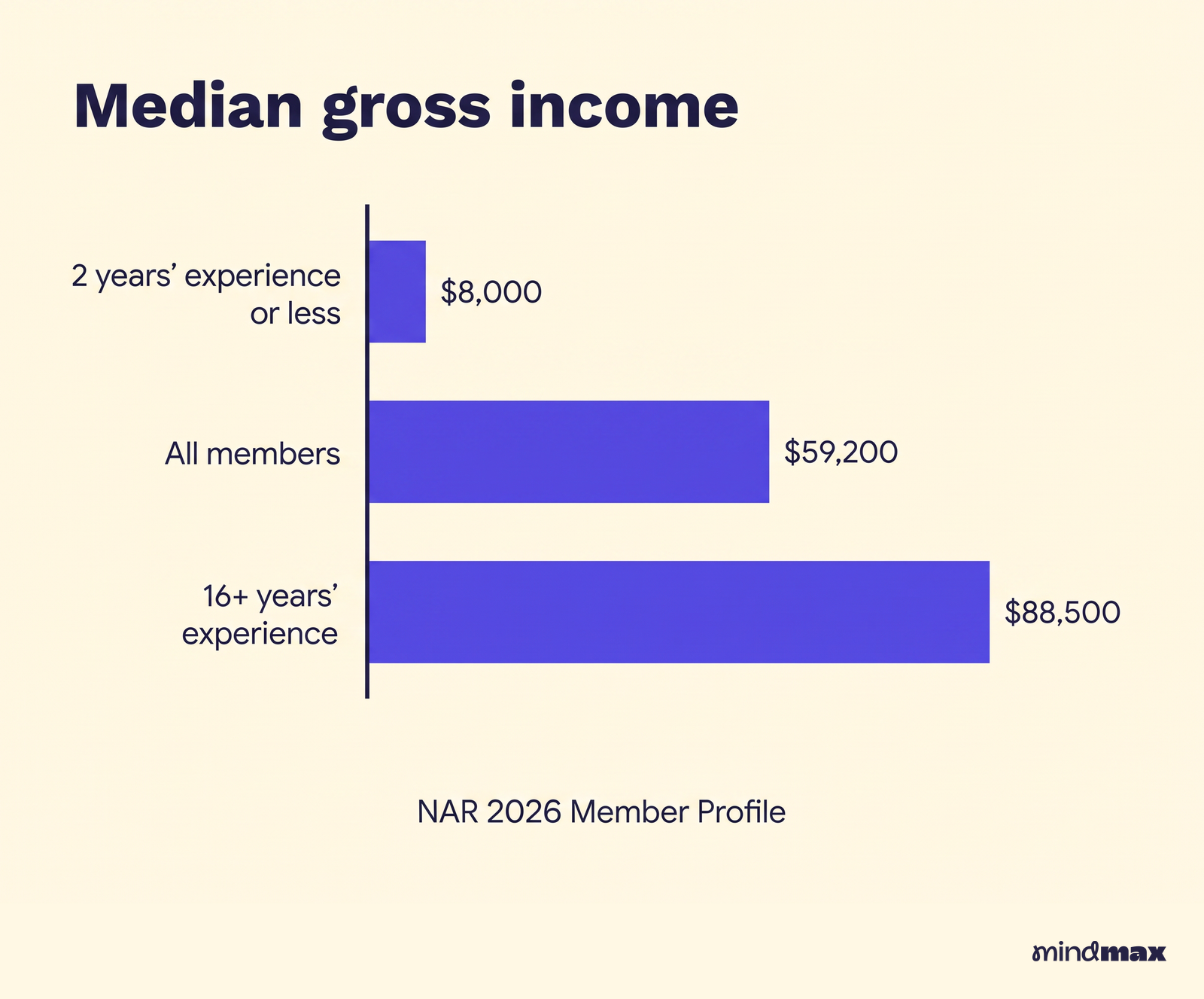
Median gross income for all members was $59,200, up from $58,100 the year before. For members with 2 years' experience or less it was $8,000. Members with 16+ years' experience had a median of $88,500. That gap is the whole story for a career changer. The money arrives years in, after you've built a base of repeat clients and referrals, which made up 28% and 22% of members' business.
The market isn't helping newcomers. NAR says existing-home sales have hovered just above 4 million a year for three and a half years, the lowest level since 1995. The typical member handled 9 transaction sides in 2025, down from 10. Members named housing affordability as the top obstacle for buyers.
Gross income is also before costs. NAR's 2025 profile put median annual business expenses at $8,010, with the vehicle as the largest category.
Two more figures matter if you're weighing a later-life switch. The median member is 57, and the median age of members with 2 years or less is 45. Plenty of people start this work in their 40s and 50s, and 27% of members earn income from another source too.
What a license really costs
There are two bills. The up-front one gets you licensed. The yearly one keeps you working.
Up-front costs in the three biggest states
Every state sets its own fees and course hours, so check your own regulator. Here is how California, Texas and Florida compare.
| California (DRE) | Texas (TREC) | Florida (DBPR) | |
|---|---|---|---|
| Pre-license education | 3 courses of 45 hours each | 180 hours, six 30-hour courses | 63 hours |
| Exam fee | $100, $100 to retake | $58 per attempt | Reported $36.75 per attempt |
| License or application fee | $350, or $450 filed together with the exam | Reported $206 | Reported $62.75, older sources say $83.75 |
| Fingerprints | $49 | Reported $37 | Fee set by the vendor |
| Renewal | $350 on time, $525 late | Check TREC | Check DBPR |
California's fees are nonrefundable. TREC posts a fee schedule effective September 1, 2026, so confirm the Texas amounts there before you pay. Florida's DBPR page names Pearson VUE as the exam vendor but doesn't list the fee, so check it when you book.
Tuition is extra. Third-party estimates put Texas courses at about $500 to over $1,600 and Florida's 63-hour course at $100 to $500. Providers that come up often include RealEstateU, Aceable Agent, The CE Shop, Colibri Real Estate, Champions School of Real Estate in Texas, ADHI Schools in California and US Realty Training in Florida. TREC publishes exam pass rates by school, which is the fairest way to compare Texas providers.
Budget for the chance of a retake too. California's first-time salesperson pass rate averaged 63.1% over four recent fiscal years. A state-by-state look at real estate exam pass rates shows why the state portion catches so many people.
The yearly costs nobody puts in the course ad
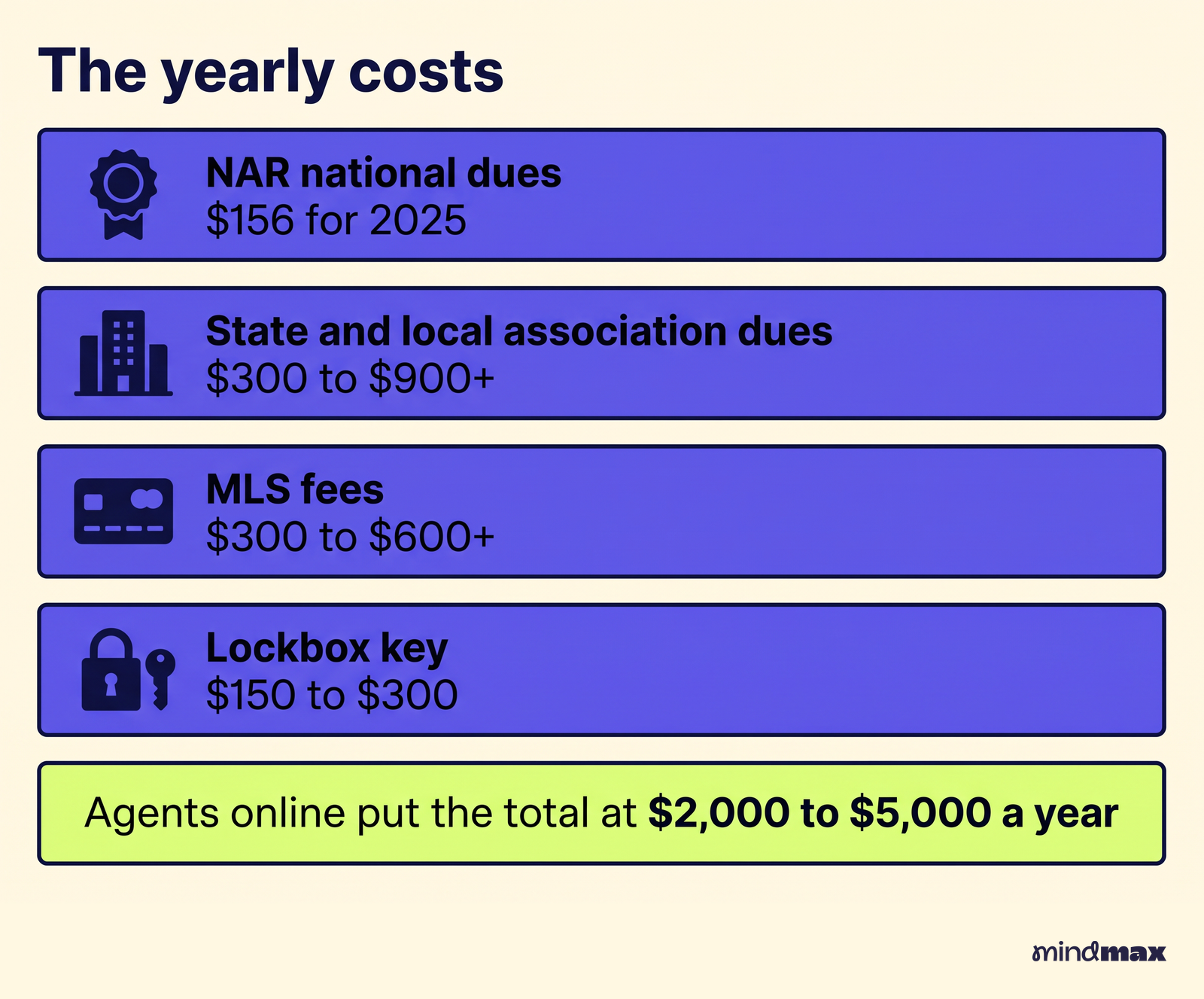
NAR national dues were $156 for 2025. For 2026, dues are reported to have stayed at $156 plus a $45 advertising assessment, for $201 in total. Check NAR's own page for the current amount.
Local costs vary by market and no national figure exists. One industry estimate puts combined state and local association dues at $300 to $900+ a year, MLS fees at $300 to $600+ a year, and a lockbox key at $150 to $300. Add your brokerage's monthly or desk fees, errors and omissions insurance and continuing education.
Agents online put the total at $2,000 to $5,000 a year. One wrote that keeping a license, MLS membership and board membership is "at minimum $3k annually."
Can you be a real estate agent part time while keeping your full-time job?
Yes. None of the big three states bans part-time practice. What limits you is everything around the license.
- You need a broker. In Texas a license is only active once a licensed broker sponsors you. In Florida a sales associate works under the direction of a broker or owner/developer. California also requires a salesperson to work under a licensed broker.
- The broker has to want you. Some brokerages don't take part-timers, and some charge monthly fees that sting when you close two deals a year. Ask before you sign.
- Your employer has a say. Check your job's rules on outside work before you start.
- Referrals still run through the broker. In Texas, referral fees must be paid to your sponsoring broker, and a referral-only office needs a business entity brokerage license.
The part-time version that works best tends to look like one investor's description, a full-time job plus "the occasional deal here and there for friends/other investors." Holding open houses and taking showing calls during work hours is much harder.
Study time is real but manageable. Candidates commonly report about 8 weeks for the course, then a short stretch of exam prep. Watch the clocks. Florida's course completion is good for 2 years, and Texas gives you one year from your application to finish everything. If you're studying around a job, MindMax, an adaptive tutor app from Memrise founders Ed Cooke and Daniel Zohar, builds a plan to pass from the time you have left, in short lessons timed for your day. For the exam itself, see how to pass the real estate exam on your first try.
Is it worth getting a real estate license just to buy and sell your own properties?
Only if you deal often. A license for your own deals means paying every year whether you trade or not, and the savings are smaller than the headline commission.
Should you get your license to sell your own house and save on commission?
For a single home sale, usually not. Here's why the savings shrink.
- Your commission on your own deal still goes through your broker's split and fees.
- What's left is taxable income, as one investor put it, "on your own deals, you have to pay income tax on the commission."
- On a purchase, the buyer-side pay may be zero. Since the 2024 NAR settlement, buyer-broker compensation is negotiable, and if the seller isn't offering any, a license doesn't put money in your pocket as a buyer.
- You take on the duties and liability of a licensee, even when you're the client.
You also have to disclose. In Texas, if you act for yourself, your spouse, parent or child, you must tell the other side in writing that you're licensed, and you can't use your expertise to their disadvantage under Rule 535.144(c). Other states have similar rules that vary in the details.
Do the break-even math first
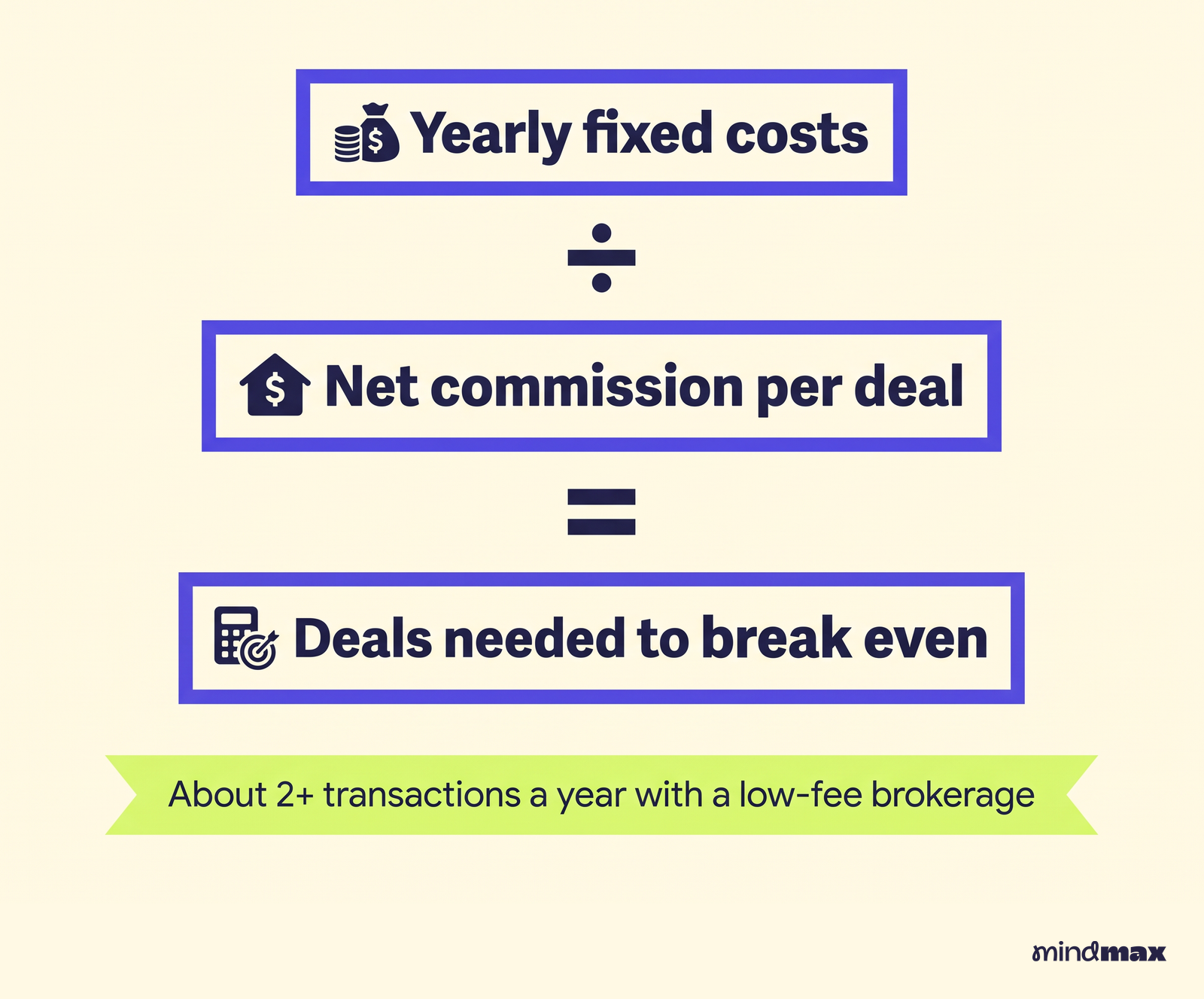
Use one simple formula. Deals needed to break even = yearly fixed costs ÷ net commission per deal.
Yearly fixed costs are dues, MLS, broker fees, insurance and continuing education. Net commission per deal is what's left after the split and tax. Agents and investors online suggest it tends to work at about 2+ transactions a year with a low-fee brokerage. That's community experience, not official data. One agent said a license "pays for itself in one transaction," while another warned that for a few deals "you'll spend more time" than it's worth.
If you move rarely, some agents go inactive between deals. Texas has an application for an inactive sales agent license. Check your state's rules, since renewal fees and education may still apply.
Is a real estate license worth it for investors who want MLS access?
It can be, but MLS access isn't part of the license. A state license doesn't require REALTOR® or MLS membership. Access normally comes through a broker and a local association, and brokerages often require both. So "just for the MLS" means passing the exam, hanging your license with a broker and paying association and MLS fees every year.
Investors who kept their license value "the wealth of information on the MLS, property information, tax information, historical data." That's worth most to people who analyze many properties and close several a year. If you buy one rental every couple of years, a good agent can send you the same listings for free.
Does it make sense for a retiree to get a license for his own properties?
It makes sense for an active retiree investor who buys, sells or refers several properties a year. It rarely makes sense for someone who plans to sell the family home and one rental.
Age isn't the issue. NAR's 2025 profile showed 44% of members are over 60. The issue is that the costs repeat. In California a salesperson license runs four years, renewal is $350 on time, and you need 45 clock-hours of continuing education each cycle. You'll still need a sponsoring broker and you'll still pay dues if you want the MLS. A retiree on a fixed income should run the break-even formula with honest numbers before paying for the course.
How to pick a brokerage if you only want a few deals a year
The brokerage decides whether the math works. Before you sign, ask in writing about
- the split on your personal deals
- monthly fees and desk fees
- whether MLS or REALTOR® membership is required
- whether part-timers are allowed
- how referrals are paid
Line this up before the exam if you can. Candidates who did found their license was hung within about a week of passing.
Frequently asked questions
How long does it take to get a real estate license while working full time?
Many candidates report about 8 weeks for the pre-license course, then a few days to a month of exam prep. California's online courses each take at least 18 days. Texas gives you one year from your application to finish all requirements, and Florida's course completion stays valid for 2 years.
Can I get a real estate license without joining NAR?
Yes. A state license doesn't require REALTOR membership. The catch is that many brokerages require it, and MLS access usually runs through a local association, so in practice most working agents join.
What are my chances of passing the real estate exam on the first try?
In California, the first-time salesperson pass rate averaged 63.1% over four recent fiscal years. A search summary puts the Texas first-time rate at 56.12%. Plan your budget and timeline with the possibility of one retake.
Can I earn referral fees with a license but no active sales?
In Texas, referral fees must be paid to your sponsoring broker, so you still need one. A referral-only office needs a business entity brokerage license there. Rules differ by state, so check your regulator.
Do I still have to pay if I put my license inactive?
Usually you skip some active costs like MLS and broker fees, but renewal fees and continuing education can still come due. Texas offers an inactive sales agent license application. Check your state's renewal rules before going inactive.